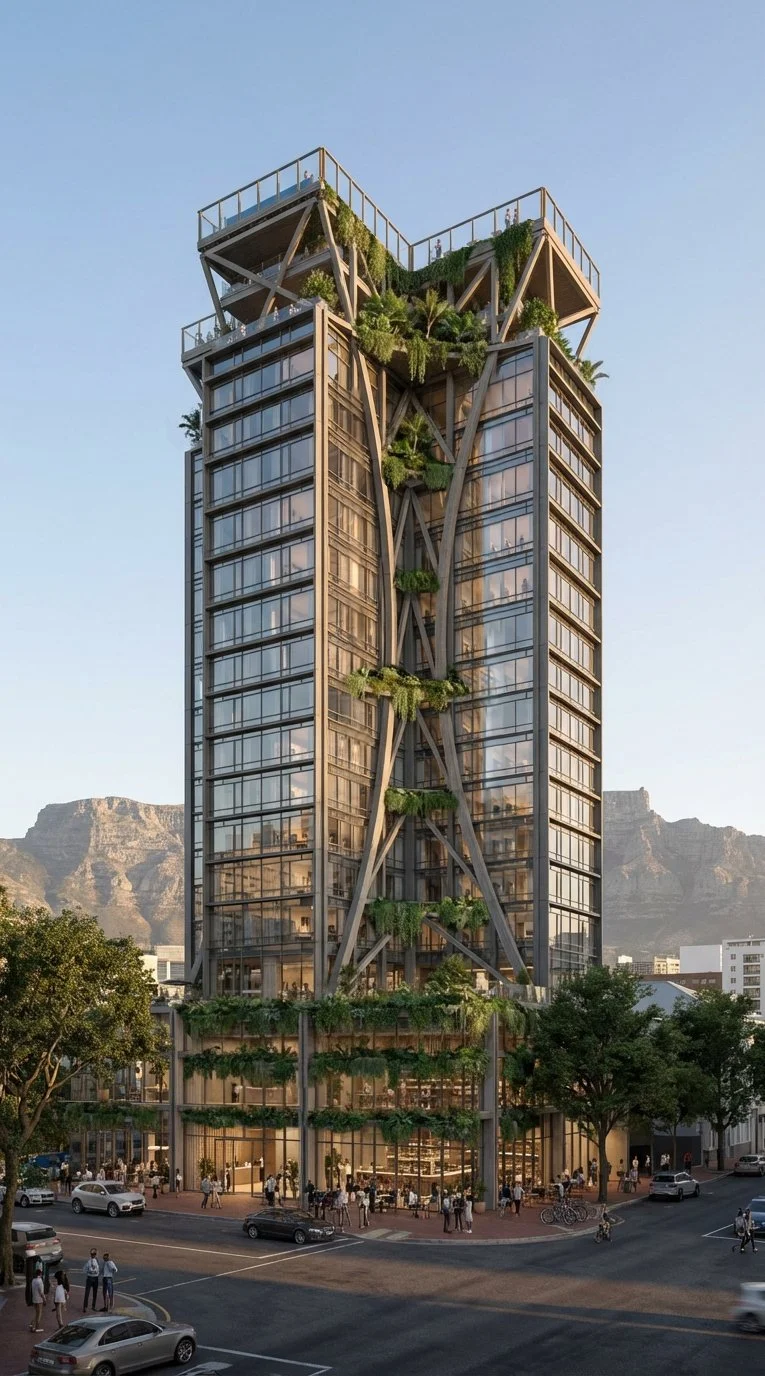
Hotel Cape Town
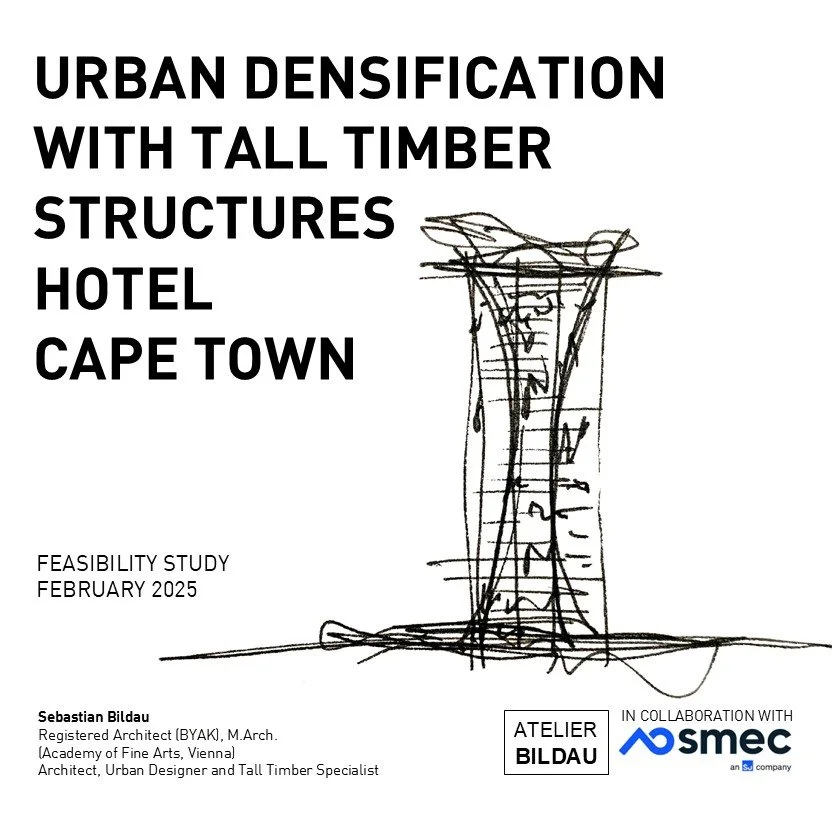
Urban Densification with Tall Timber Structures
How Lightweight Mass Timber Unlocks New Floors With Minimal Structural Upgrades.
Imagine our cities growing like forests—lively, diverse, and regenerative. Today, building extensions, redensification, wooden high-rises, and innovative neighborhood developments show how sustainable urban development can succeed. With wood as a material, we are not only creating new spaces, but also functioning cycles that combine ecological and social aspects. Let's discover together how sustainable urban landscapes are created in which houses, like trees, shape a living, resilient cityscape.
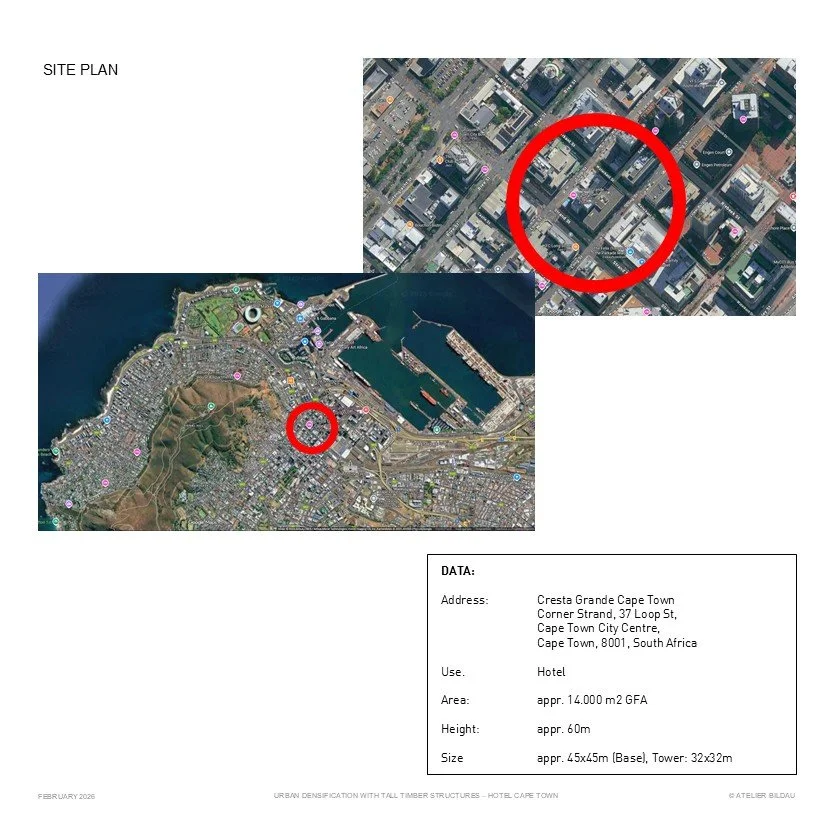
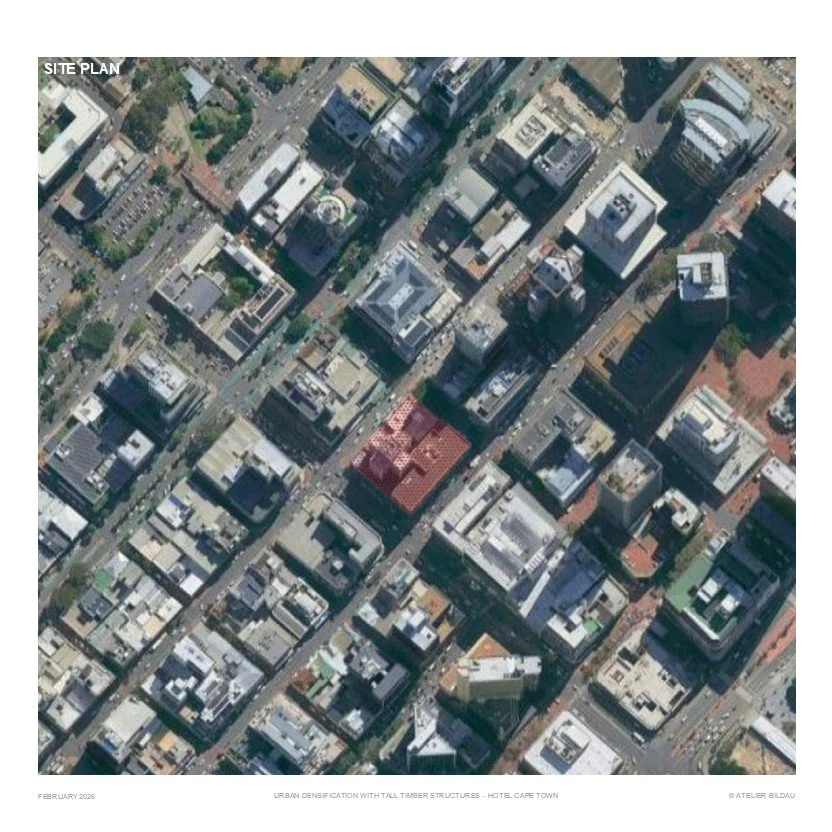
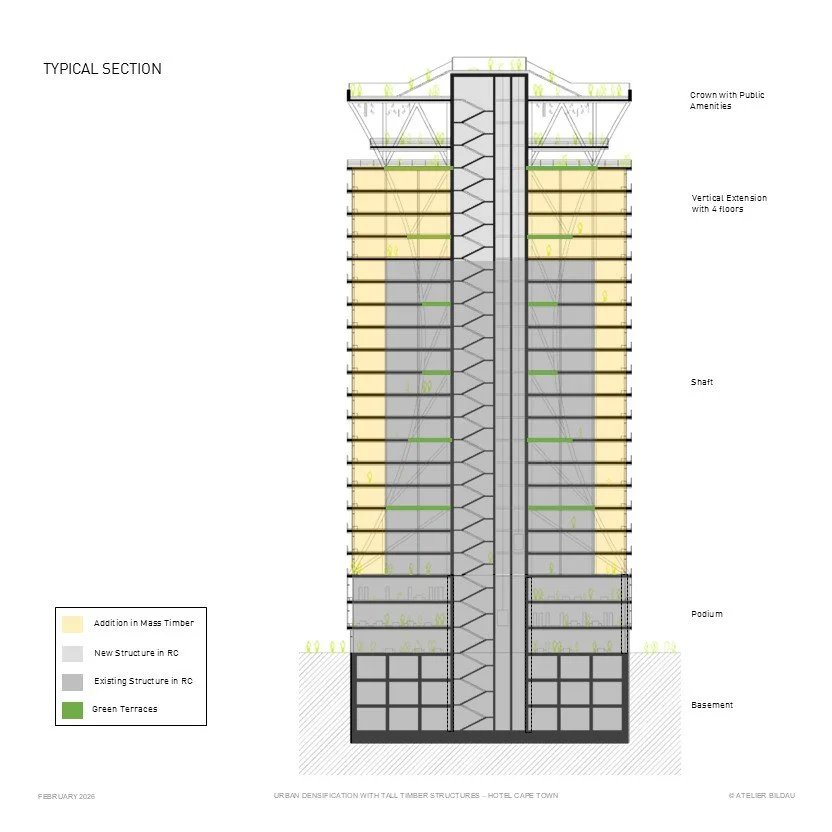
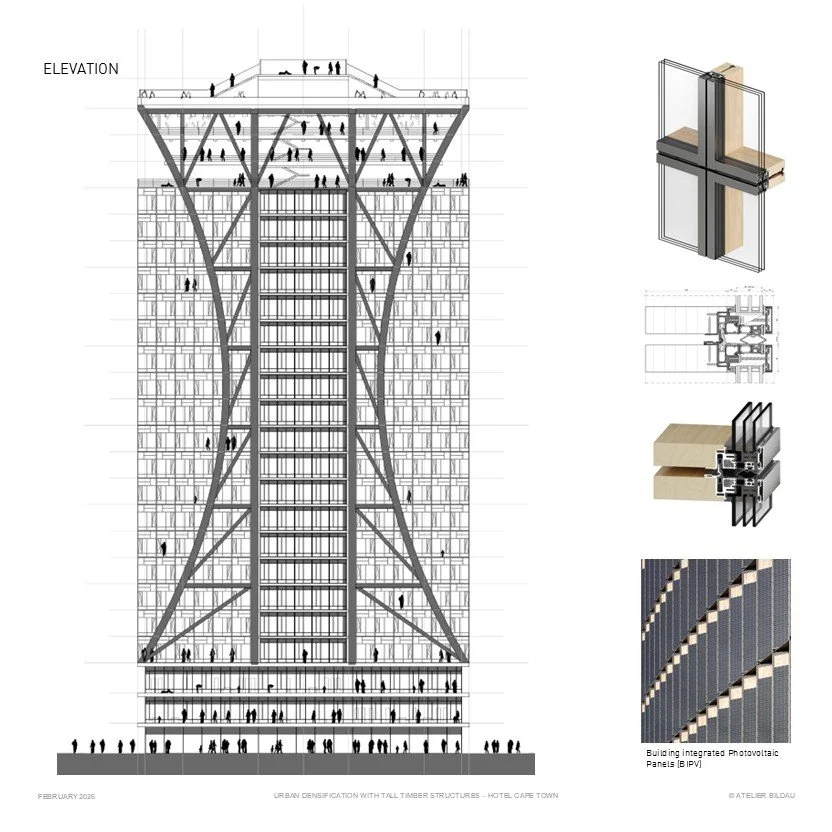
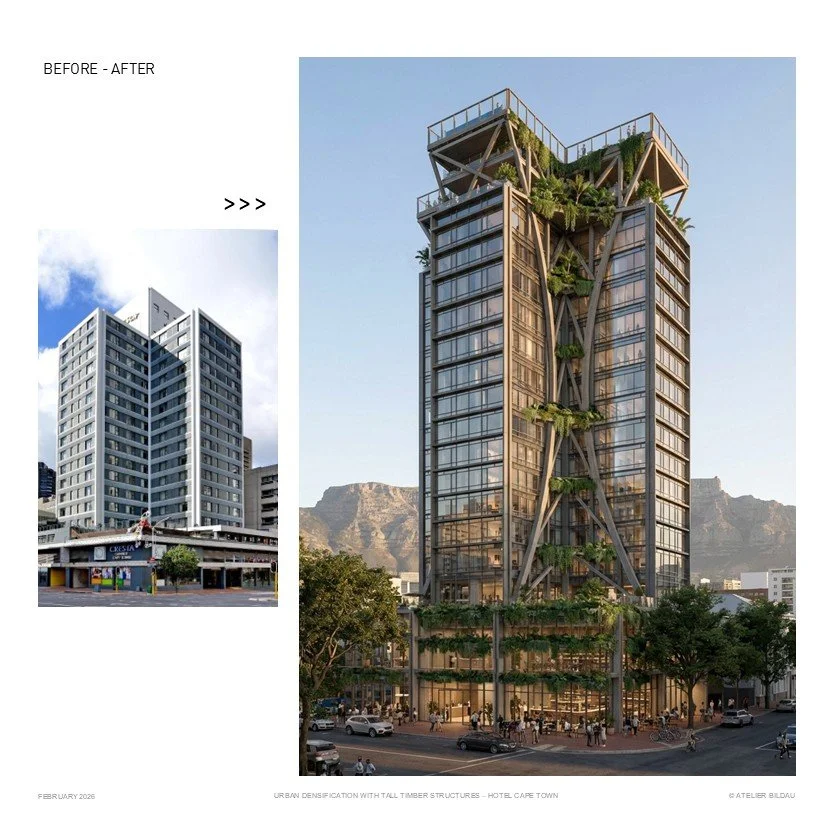
The practical example of the Cresta Grande Hotel in Cape Town demonstrates how these concepts can be implemented: A joint research, design and feasibility project by Atelier Bildau and SMEC South Africa focuses on sustainable, large-scale timber construction and shows how existing buildings can be densified in a resource-efficient way.
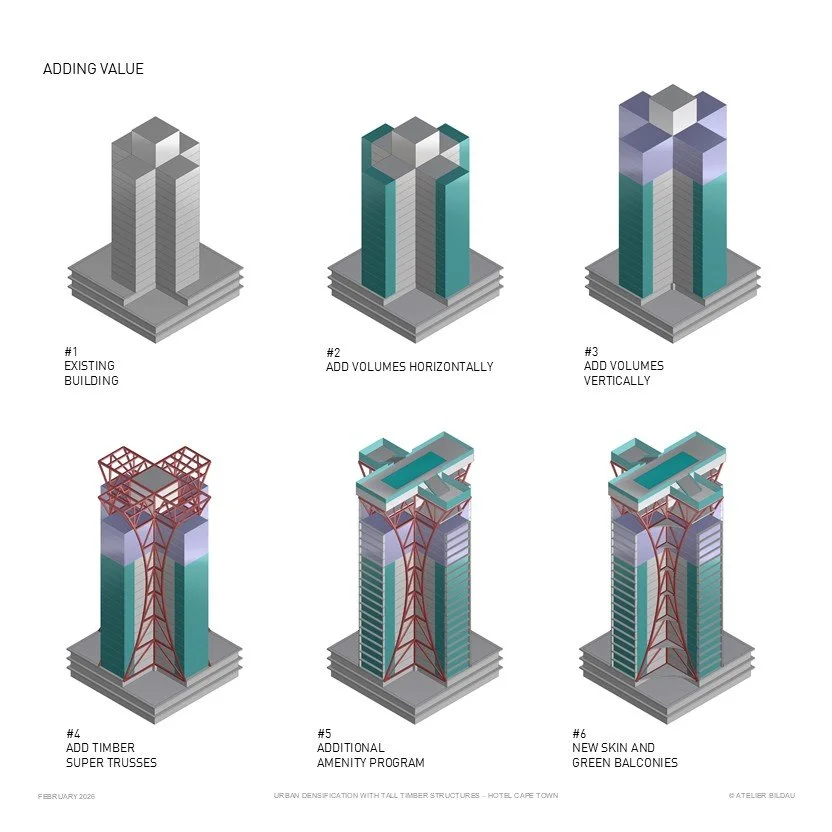
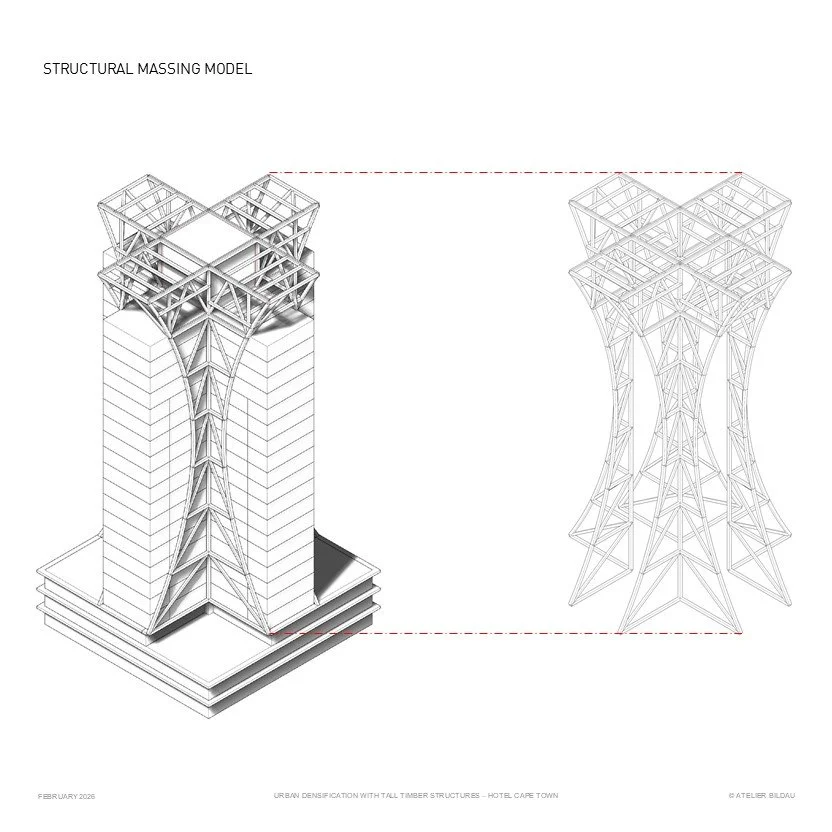
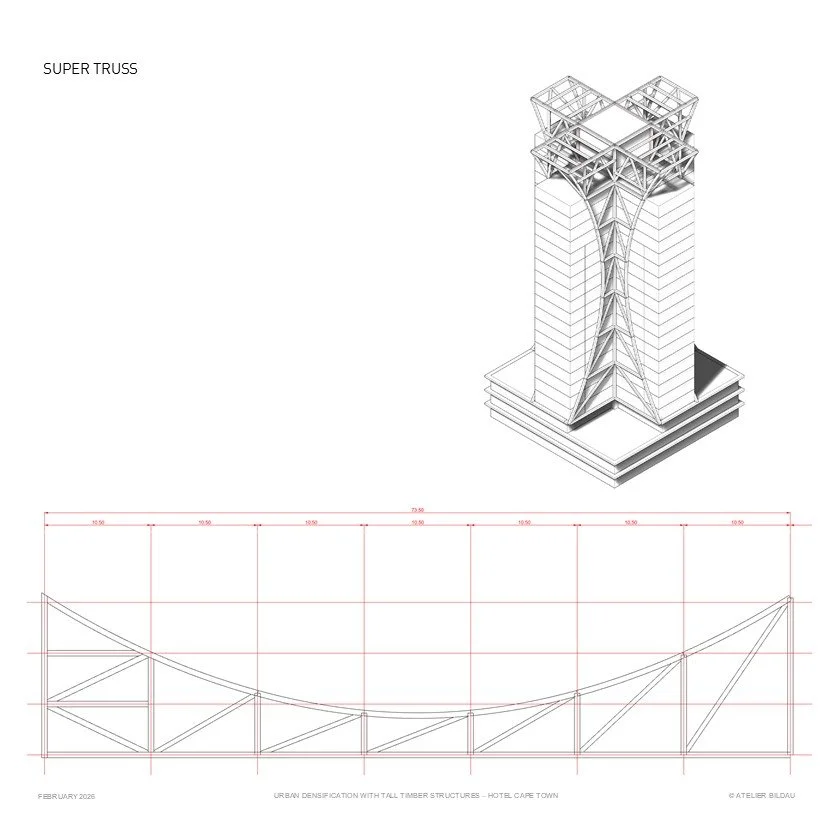
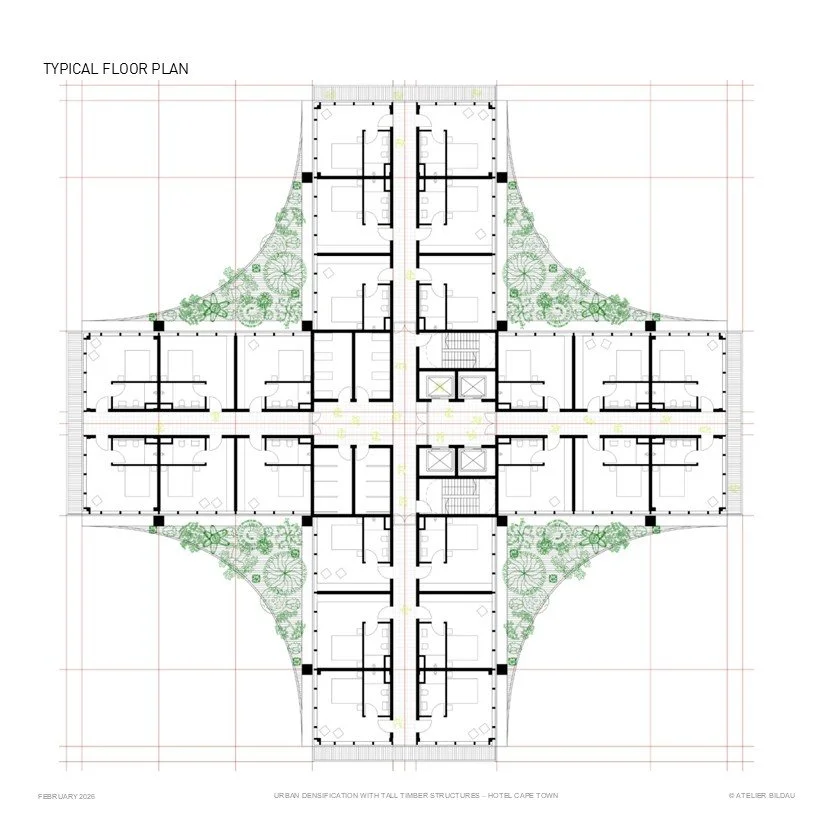
DESIGN PARAMETERS
Adaptive Reuse
Densification
Mass Timber Construction
Prefabrication
Green Towers
Mixed Use Development
Public Amenities on the Rooftop
Dry and Clean Construction
Adaptation of Cities to Climate Change
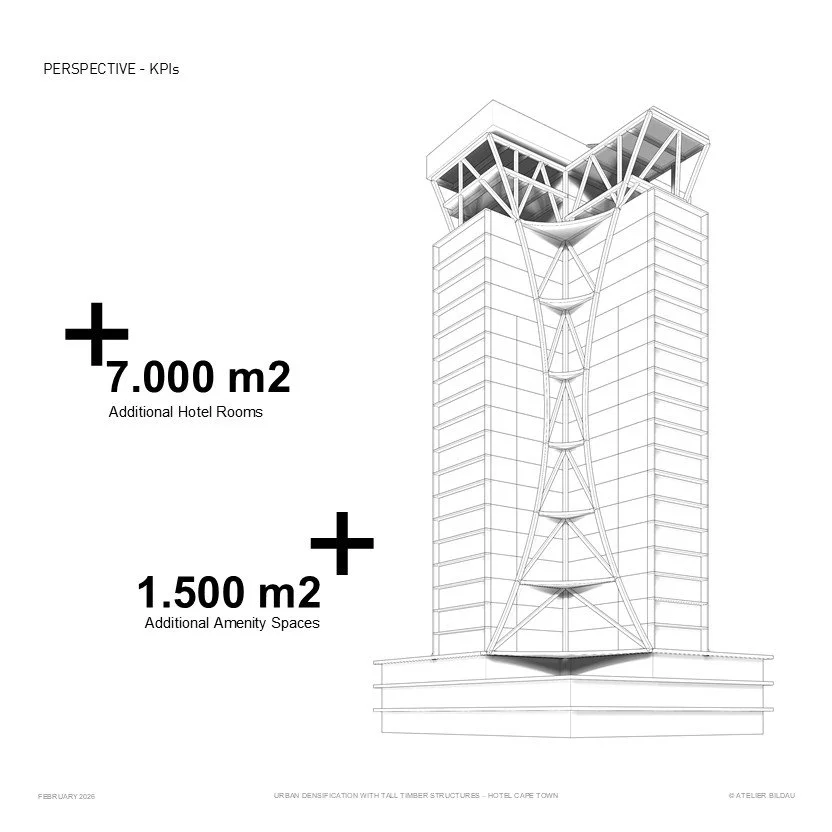
These principles are central to the Cresta Grande Hotel’s transformation. Adaptive reuse allows for the revitalization of existing structures, giving them new purposes and extending their lifecycle while minimizing waste. By densifying the current building, the project makes efficient use of Cape Town’s limited urban land, responding to the need for more sustainable and space-conscious cities.
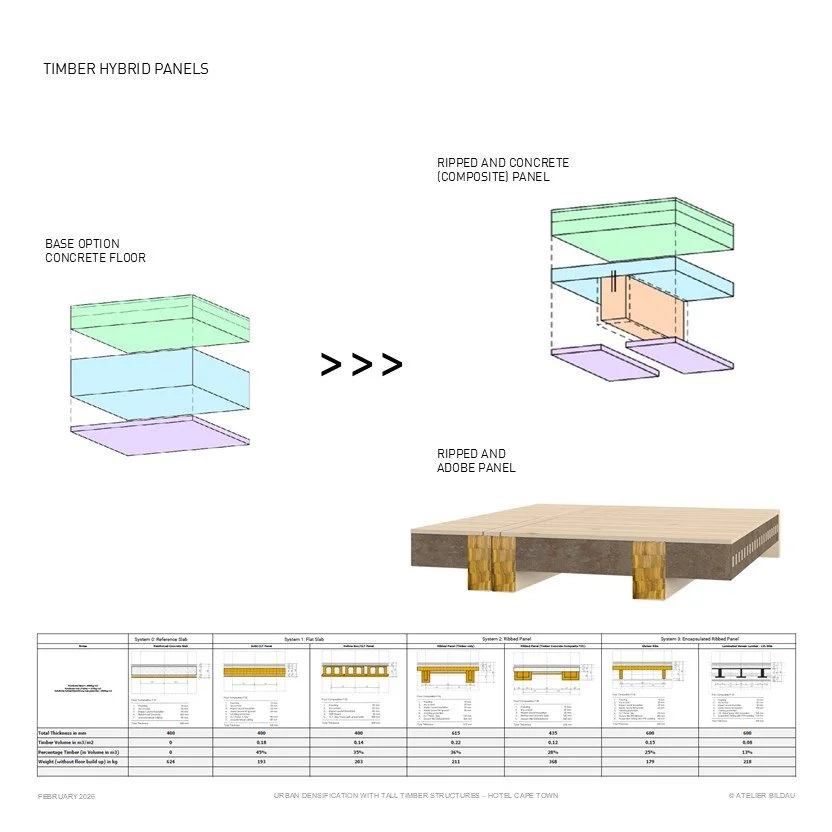
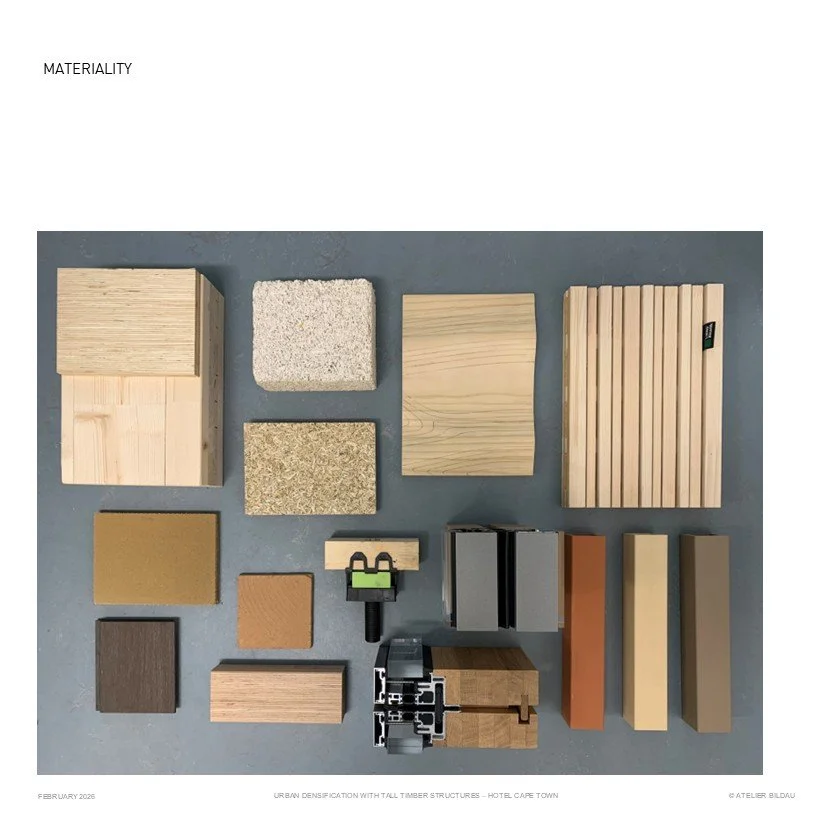
Central to this approach is the use of mass timber construction. Mass timber is not only lightweight and strong, but it also significantly reduces the carbon footprint of the building process. This material enables the addition of new floors with minimal structural reinforcement, unlocking new potential for vertical growth in aging urban environments.
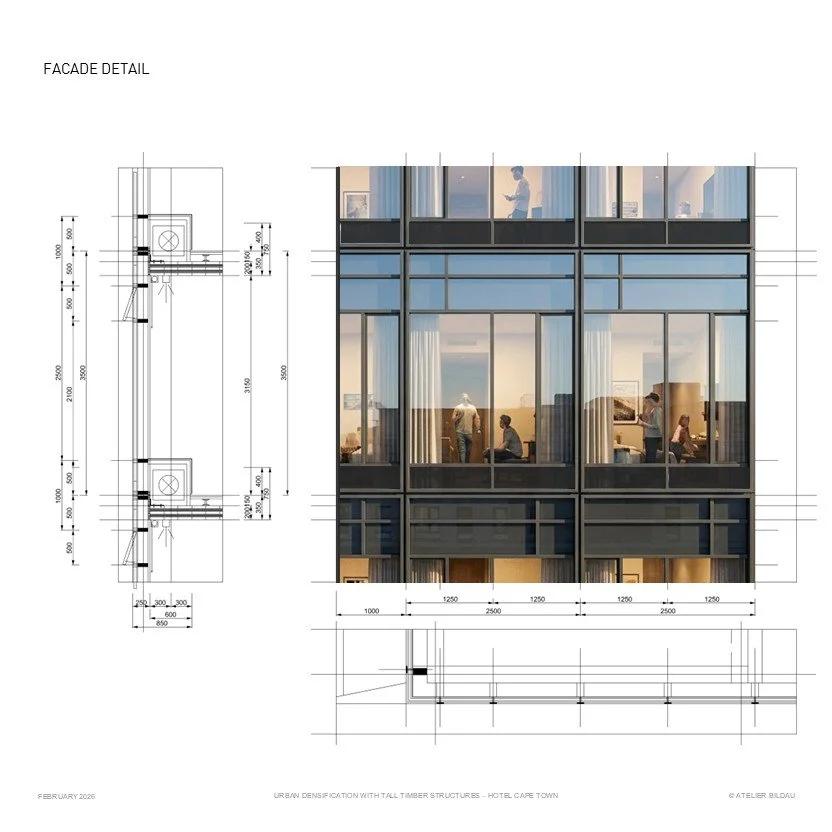
Prefabrication techniques further enhance the project’s sustainability and efficiency. Components can be manufactured off-site and assembled quickly and quietly on-site, minimizing disruption to the urban neighborhood and ensuring high quality and precision.
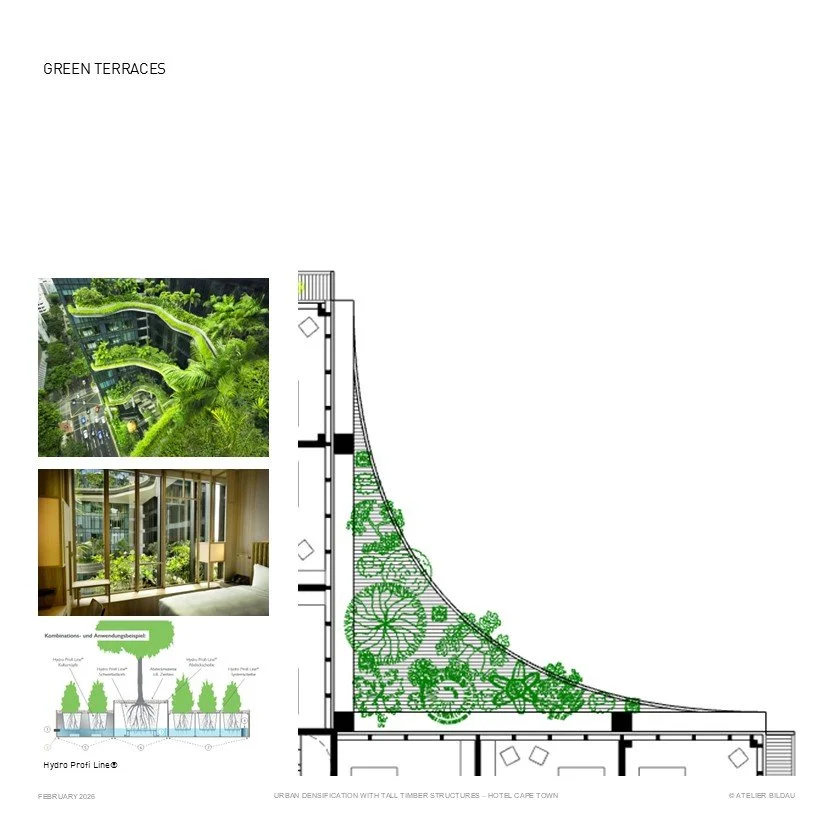
The design envisions green towers that incorporate vegetation and natural elements, contributing to improved air quality, enhanced biodiversity, and a healthier urban environment.
The mixed-use character of the development supports a vibrant community by integrating different functions—such as residential, hotel, commercial, and recreational spaces—within a single site.
Public amenities on the rooftop create inclusive spaces that offer panoramic views and social gathering opportunities, making the building a hub for both guests and the wider community.
The construction process is designed to be dry and clean, reducing water usage and minimizing dust and noise pollution—benefits that are especially important in dense urban contexts.
Ultimately, these strategies contribute to the adaptation of cities to climate change. By combining adaptive reuse, densification, mass timber construction, prefabrication, green design, and community-focused mixed use, the Cresta Grande Hotel sets a benchmark for resilient, sustainable urban transformation.